
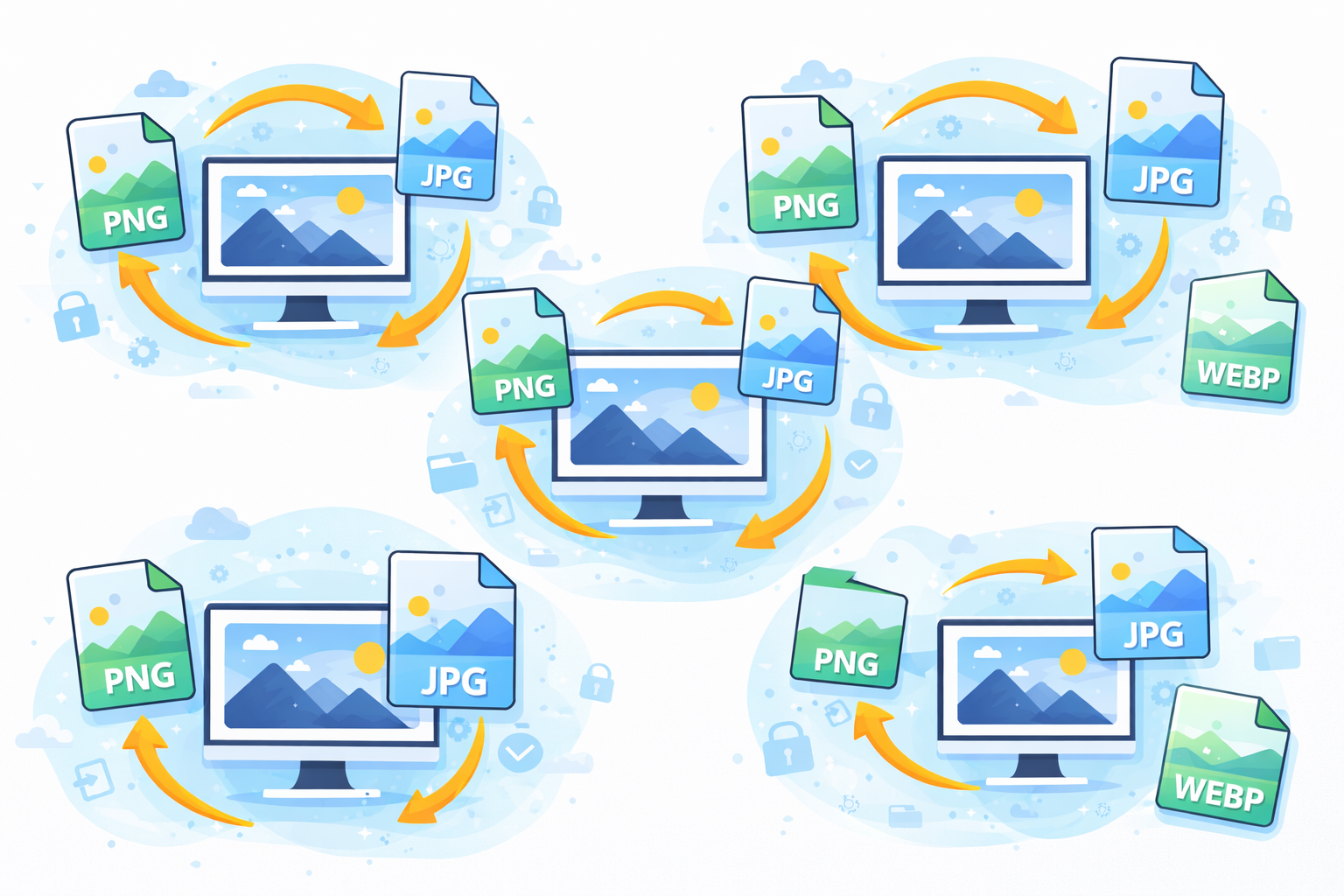
Introduction to the Best Ways to Change Image Formats for Free
Images are all over the web. If you manage your own blog or manage social media platforms and graphics or make presentations, the format of your images is important. Different formats such as JPG, PNG, WEBP, GIF, and BMP each have their own purpose.
Sometimes, you download a picture only to find that it’s incompatible with the web or software. This is when knowing the best ways to change Images Formats for Free can be extremely helpful.
Luckily, you don’t have to purchase costly editing programs. A variety of free software allows users to convert images swiftly and securely in a matter of minutes.
In this comprehensive guide we will cover:
- What is the importance of conversion to image format
- The most commonly used image formats are the most common.
- Tools that are free to use today
- Step-by-step instructions for converting images
- Common mistakes people make
- Expert tips for maintaining image quality
When you finish this article, you’ll know how to alter images easily and efficiently.
Understanding Image Formats
What Are Image File Formats
The format of an image determines how images are stored, compressed and presented. Every format comes with its unique advantages dependent on the way in which the image is utilized.
For instance:
| Format | Best Use |
|---|---|
| JPG | Photos and web-based images |
| PNG | Graphics that have transparency |
| GIF | Images animated |
| WEBP | Modern web optimization |
| BMP | Raw images of high-quality. |
Making the right choice in format can increase the speed of websites as well as compatibility, image clarity.
Why Converting Image Formats Is Necessary
There are many reasons you might have to convert images:
- Web compatibility
- Reduces the size of files
- Enhancing loading speed
- Protecting transparency
- The requirements for a platform
Many websites today prefer WEBP images since they load more quickly than other formats.
Understanding the most efficient methods to alter formats of images for free will save the time as well as storage space.
Most Common Image Formats Explained
JPG / JPEG Format
JPG is among the commonly used image format. It utilizes compression to reduce the size of files while preserving good quality images.
Ideal for:
- Photography
- Blog images
- Social media posts
But, JPG doesn’t support transparency.
PNG Format
PNG is a great choice when you require transparency or clear images.
Advantages:
- Compression that is lossless
- Supports transparent backgrounds
- Higher image quality
The drawback has to do with the fact that PNG files may be bigger than JPG.
WEBP Format
WEBP is a contemporary format created by Google that delivers superior compression without sacrificing quality.
Advantages are:
- Smaller file sizes
- Speedier loading of websites
- The need for transparency
Many websites today use WEBP to increase performance.
GIF Format
GIF is used primarily to create animations.
It can be used for simple motion graphics, but it is limited in colors when compared against other formats.
Best Ways to Change Image Formats for Free
There are many effective ways currently available.
1. Online Image Converter Websites
Online converters are your best choice. They do not require downloading and can be operated directly through your web browser.
Some of the most popular Free Converters comprise:
- CloudConvert
- Convertio
- Online-Convert
How does it work?
- Upload your photo
- Select the new format
- Click to convert
- Download the image that has been converted
This method is speedy and user-friendly for newbies.
2. Using Free Image Editing Software
If you want greater control over the settings of your image Free software tools can be a good choice.
Examples include:
- GIMP
- Paint.NET
- Photopea
Through these applications, you are able to open a picture and then export the image to an alternative format.
Steps typically include:
- Open the image
- Click File
- Choose Export As
- Choose the format you want to use.
This is among the most trusted Methods to Change Formats of Images for Free as it also permits editing.
3. Convert Images with Built-in Computer Tools
Your computer might already include tools to convert images.
Windows Method
Using Microsoft Paint:
- Start the picture in Paint
- Click File – Save As
- Choose JPG, PNG, BMP, or GIF
Mac Method
Using Preview:
- Open the image
- Click File – Export
- Select the format you prefer.
This method is easy and does not require installation of any equipment.
4. Use Mobile Apps for Image Conversion
Smartphones can also convert images quickly.
The most popular apps are:
- Image Converter (Android)
- The Image Converter (iOS)
These apps let you transform images straight from the gallery of your smartphone.
5. Batch Image Conversion Tools
If you have to convert a lot of images at the same time batch converters will save you lots of time.
Examples include:
- XnConvert
- IrfanView
- FastStone Image Viewer
These tools let you convert hundreds or dozens of images at once.
Step-by-Step Guide: Converting an Image Online
Let’s look at an easy illustration.
- Visit an online converter site
- Upload your photo
- Choose your output formats (JPG PNG, JPG, WEBP and so on.)
- Click Convert
- Download the image that has been converted
Most converters can process files within the span of a few seconds.
Tips to Maintain Image Quality During Conversion
Image conversion may decrease the quality of images. To avoid this, you should follow these guidelines:
Use Lossless Formats When Needed
If quality is important, select formats such as:
- PNG
- TIFF
These formats maintain maximum image detail.
Avoid Repeated Conversions
Converting the same image several times could reduce the quality. It is best to only convert one time whenever you can.
Adjust Compression Settings
A variety of tools let you regulate compression.
Lower compression means higher quality, but bigger files.
Keep the Original File
Always backup that original picture in the event that you have to convert it in the future.
Common Mistakes When Changing Image Formats
Simple tasks can create problems if not done correctly.
1. Choosing the Wrong Format
For instance:
- The use of PNG files for large images can increase the size of your files in unneeded ways.
- Utilizing JPG to make graphics can cause transparency to be lost.
2. Ignoring Image Compression
Insufficient compression can lead to blurred or pixelated images.
3. Forgetting Transparency
When an image is transparent changing it to JPG removes the transparency.
4. Uploading Sensitive Images to Unknown Websites
Some online converters save the uploaded files for a short time. Make sure to use reputable tools.
Advantages of Free Image Conversion Tools
The free tools offer many advantages.
Cost-Effective
There is no need for expensive subscriptions to software.
Easy to Use
The majority of converters only require the click of a button.
Accessible Anywhere
Online tools can be used on any device connected to the internet.
Fast Processing
Many converters are completed in a matter of seconds.
When Should You Convert Image Formats
Image conversion is beneficial in a variety of situations:
- Making images for web pages
- Posting photos to social networks
- The reduction in file size is a benefit for email.
- Making logos transparent
- Optimizing images to improve pages
Knowing the best ways to change Images Formats at no cost can help you manage these responsibilities effectively.
External Resource for Image Optimization
For more advanced strategies to optimize your image You can look into Google’s official guides:
https://developers.google.com/speed/webp
This guide will explain how new image formats such as WEBP increase the speed of your website.
Frequently Asked Questions (FAQs)
1. What is the most efficient free tool to alter formats of images?
Some of the top tools are CloudConvert, Convertio, GIMP, and XnConvert. They’re free and simple to make use of.
2. Can I convert images without losing quality?
Yes. using lossless formats like PNG or TIFF will preserve the image’s quality throughout conversion.
3. Is it safe to use online image converters?
The most well-known tools are secure however, you should avoid uploading sensitive images on sites that are not known to you.
4. Which format is best for websites?
WEBP is one of the most popular formats for websites as it has high quality and smaller size files.
5. Can I convert multiple images at once?
Yes. Batch converters like XnConvert and IrfanView let users to convert multiple images at once.
6. Why does my image lose quality after conversion?
Quality loss is usually experienced when you convert to compressed formats such as JPG several times or when using settings for high compression.
Conclusion
Being aware of the best ways to change formats for images is a must-know knowledge for anyone working in the field of digital image. If you’re an artist, blogger or student, or a an owner of a business, having the ability to quickly convert images will help you save time and speed up your workflow.
Online converters as well as image editing software built-in computer programs and mobile applications allow for a simple conversion of images. By selecting the appropriate format, keeping the image quality and avoiding common mistakes it is possible to ensure that your photos always appear professional and load swiftly.
While technology is continuing to advance new formats such as WEBP become more and more sought-after in web-related performance. Understanding how to convert images effectively will ensure you are ahead of the curve in the digital world of today.