
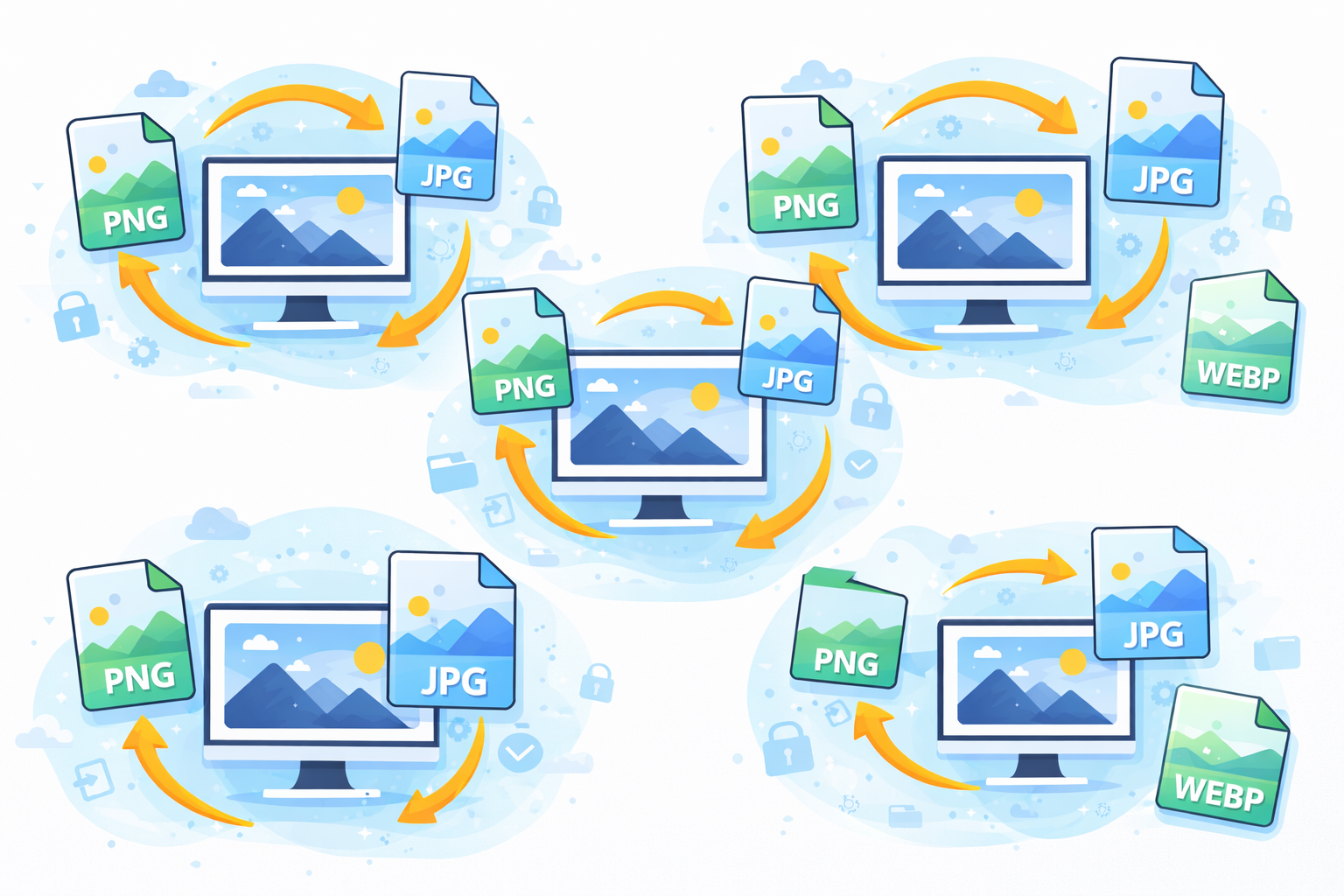
Understanding Image Formats and Why Conversion Matters
Images appear everywhere on the web. From posts on social media to banners for websites digital images help convey ideas in a short time. However, not every format will work in every circumstance. This is why knowing the best free methods to Convert Images Formats Online is so important.
Different formats for images store data in distinct ways. Certain formats focus on high-quality and others are more suited to smaller size files. When you convert images to another format, you are essentially changing the way that images are saved and is compressed.
For instance:
-
Photographers may transform PNG pictures to JPG to reduce the size of files.
-
Web developers can convert images to WEBP in order to enhance page load speed.
-
Designers can convert JPG files to PNG in order to allow transparency.
Knowing the best time and method to convert images will help to improve compatibility, performance as well as storage performance.
Common Image File Types Explained
and building healthy habits are a few of the most commonly used image formats currently used:
| Format | Best For | Key Features |
|---|---|---|
| JPG / JPEG | Photography | High compression Smaller size of files |
| PNG | Logos and graphics | Support for transparency |
| WEBP | Websites | Excellent compression and high-quality |
| GIF | Simple animations | Supports looping animation |
| BMP | Raw images | Large files, minimal compression |
Each format has its own function. The right format is the one that will ensure your images will display correctly across platforms and devices.
When You Should Convert Image Formats
It is possible the conversion of images for a variety of scenarios:
-
Optimization of Websites: Reduce file sizes to speed up loading.
-
Editing needs: Some editing software prefers certain formats.
-
Transparency requirements: Converting JPG to PNG permits transparent backgrounds.
-
Issues with compatibility: A few applications allow certain formats.
In many instances online converters offer the fastest and most simple solution.
Best Free Methods to Convert Image Formats Online
The best free methods to Convert Images Formats Online rely on programs that operate directly in your browser. These tools do away with the requirement for installing software and enable quick conversions in minutes.
Let’s take a look at the most effective methods.
Method 1: Using Free Web-Based Image Converters
Web-based converters are your best alternative. They let users upload pictures and convert them immediately.
A typical procedure:
-
Download the picture.
-
Choose your output type.
-
Change settings as needed.
-
Download the file that was converted.
The most popular features are:
-
Drag-and-drop upload
-
Batch conversion
-
Automatic compression
-
Format choice
Many converters for free accept formats such as JPG, PNG, GIF WEBP, TIFF.
CloudConvert is a good example which can support many formats. You can explore it here:
https://cloudconvert.com
These services are integrated directly into your browser, allowing them to be used to any device.
Method 2: Using Cloud Storage Converters
Cloud storage platforms may include built-in tools for conversion.
For instance, Google Drive allows images to be downloaded and opened to various formats via integrated applications.
Benefits include:
-
Cloud storage that is automatically created.
-
Simple sharing
-
Secure file handling
-
There is no local storage requirement
This technique is particularly useful in the event that you already have your files online.
Method 3: Using Free Graphic Editing Platforms
Certain design tools can also function in the capacity of format convertors.
Popular examples include:
-
Canva
-
Pixlr
-
Photopea
These tools let you:
-
Upload images
-
If necessary, edit them.
-
Export them in various formats
Export options typically comprise:
-
JPG
-
PNG
-
PDF
-
WEBP
This method is great for those who require minor editing prior to converting the image.
Method 4: Using Open-Source Conversion Websites
Open-source software allows no cost conversion with no limitations.
They usually offer:
-
Unlimited conversions
-
There are no sign-up conditions
-
Frameworks of open technology
These tools are especially beneficial for those who would prefer a more open and community-based software.
Step-by-Step Guide to Converting Image Formats Online
Online conversion of images usually uses the same basic workflow.
1. Uploading and Selecting the Correct Format
Begin by selecting your source image.
Most converters allow:
-
Drag-and-drop upload
-
File browser selection
-
Cloud import of files
Once you have uploaded the file, select your output type.
Examples:
-
JPG – PNG
-
PNG – WEBP
-
BMP – JPG
Always choose the one that best suits your objective.
2. Adjusting Quality and Compression Settings
Many applications allow you to alter output settings.
Common choices are:
-
Image quality and percentage
-
Compression level
-
Resolution adjustment
-
Removal of metadata
A higher compression rate results in smaller files, however it does affect quality of images.
For websites making websites, balancing quality with the size of files is crucial.
3. Downloading and Verifying the Converted Image
After conversion has finished after conversion, download the image and confirm:
-
Image quality
-
Size of the file
-
Platform compatibility with your device
Open the image using your preferred browser to ensure it’s displayed in the correct way.
Advantages of Using Online Image Conversion Tools
Online converters provide a variety of benefits.
1. No Software Installation
Everything happens within the browser. This means that you can convert images on computers that are shared or restricted.
2. Cross-Platform Compatibility
Online tools are based on:
-
Windows
-
macOS
-
Linux
-
Smartphones
-
Tablets
3. Fast Processing
Most conversions are completed in several seconds.
4. Free Access
Numerous tools allow unlimited free conversions to allow for day-to-day use.
Potential Risks and How to Avoid Them
Although they are convenient online converters are convenient, they can also pose some potential dangers.
Protecting Sensitive Images
If your photos contain sensitive details, you should choose a trusted platform which offer secure processing of your files.
You should look for tools that
-
Make use of HTTPS encryption
-
Remove files following conversion
-
Avoid long-term storage
Checking File Size Limits
Free tools typically have size limitations.
The most common restrictions are:
-
Maximum size of files (10-100 MB)
-
Limits to daily conversions
-
Restrictions on batch conversion
If you often convert large images, you should choose an option with a large limit.
Common Mistakes When Converting Image Formats
Simple conversions can result in mistakes if not cautious.
Ignoring Compression Settings
A lot of compression can result in blurred or pixelated images.
Always test the output prior to the use.
Converting Multiple Times
Repeated conversions degrade image quality.
For instance:
PNG – JPG – PNG – JPG
Each conversion reduces image fidelity.
Always save the original file for backup.
Tips for Choosing the Best Image Format
Choosing the right format can help you save time and boost efficiency.
Utilize these guidelines for quick reference:
For websites
-
WEBP
-
Optimized JPG
for graphics with transparency
-
PNG
For photography
-
JPG
To allow animations
-
GIF
For editing
-
PNG or TIFF
Comparison of Popular Image Formats
| Format | File Size | Transparency | Best Use |
|—|—|—|
| JPG | Small | No | Photography |
| PNG | Medium | Yes | Graphics & logos |
WEBP Websites
| GIF | Small | Limited | Animation |
| BMP | Large | Raw images
WEBP is quickly becoming the preferred format for websites of the future due to its high compression efficiency.
Frequently Asked Questions
1. What is the simplest method of converting images on the internet?
The most straightforward method is to utilize web-based converters, where you upload a photo choose the output format and download the final result in just a few minutes.
2. Do online photo converters are safe to utilize?
The majority of trusted converters are secure. Make sure to choose a platform that uses encrypted connections. They also automatically delete the uploaded files.
3. What image format is the best for web pages?
WEBP is one of the most effective choices because it offers top quality and keeps the file size small.
4. Can I transform multiple images at one time?
Yes. A lot of converters support batch conversion which allows users to upload and then convert several files at the same time.
5. Does the conversion of an image affect the quality?
Sometimes. Lossy formats such as JPG compress images and can be a little less quality. Lossless formats, such as PNG retain more details.
6. Can I convert images to my smartphone?
Yes. The majority of online converters function within mobile browsers, making them accessible to smartphones and tablets.
Conclusion
Knowing the most effective and free methods to convert images Formats online will significantly enhance the way you handle digital images. When you’re trying to optimize the performance of websites or preparing images to design your own projects or just reducing file size online converters can provide the fastest and most convenient solution.
Through understanding the different formats of images by using reliable tools and avoiding common errors, you can easily convert images while keeping the quality. In only a few clicks everyone, from beginners to experts–can convert images into the best layout for any task.