
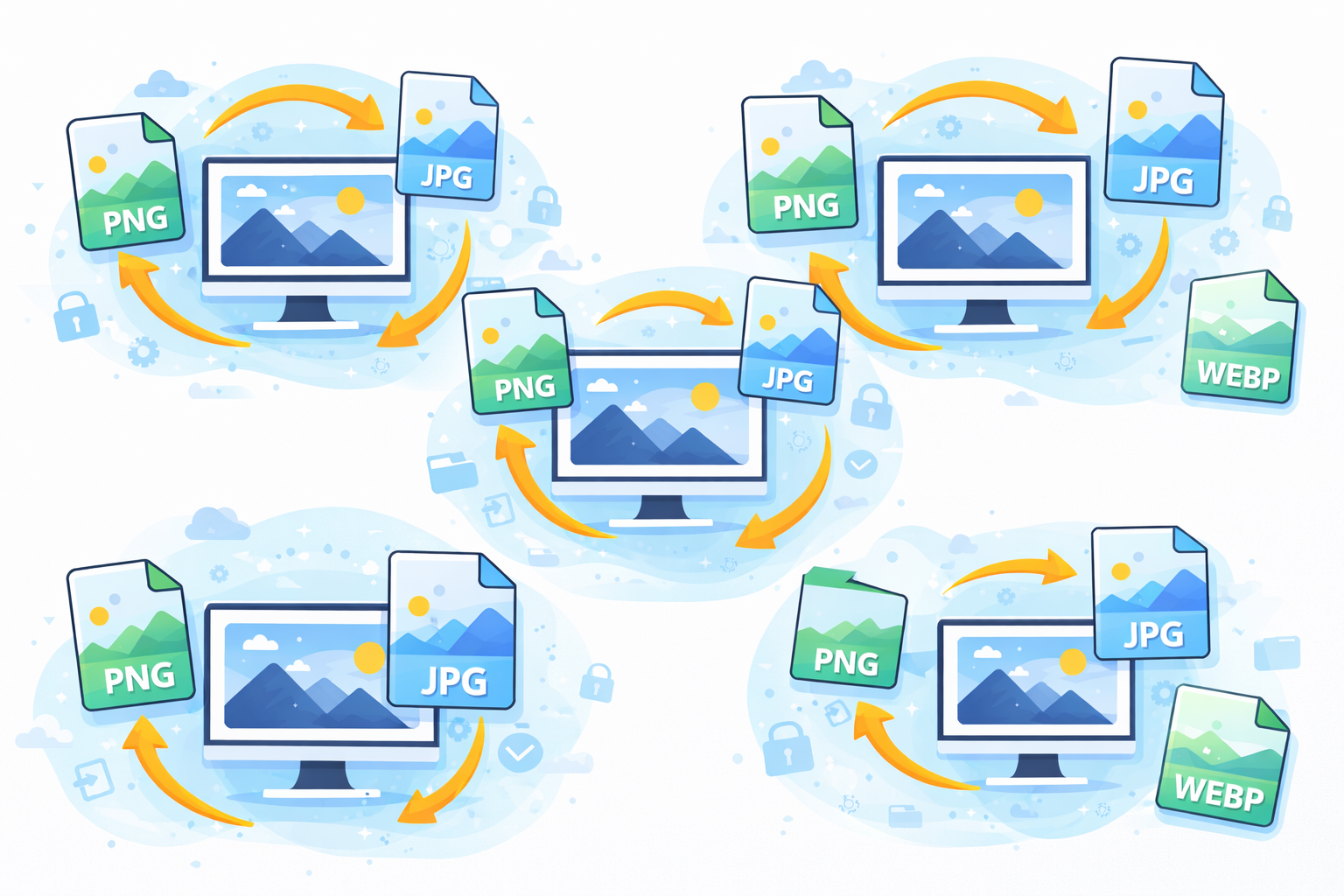
Images can improve the content of a website or blog in a dramatic way, but they can cause performance issues If they’re not optimized correctly.
Impact on Page Speed
Large images are among the reasons that websites load very slowly. If visitors visit your site the browser has to download each image that appears present on the page.
If an image is a few megabytes it could take a few minutes to load. Add multiple images on a page and your website will become slow.
By compressing or converting images, it decreases file size, but not losing quality. This speeds up loading pages and boosts overall performance.
Websites that load quickly also decrease bounce rates as users are more likely stay on the site when it loads quickly.
SEO Benefits of Optimized Images
Search engines such as Google take into account page speed as well as user experience when evaluating websites. Optimized images enhance both.
The proper image conversion lets you include:
-
Names of files that are SEO-friendly
-
Alt text descriptions
-
Data structures for images
These factors aid search engines to understand the content you post better.
For detailed technical guidelines on image optimization, you can review Google’s recommendations here: https://developers.google.com/search/docs/appearance/google-images
Understanding Image Formats
Before you can learn how to convert photos to Blogs and Websites It is important to know the most popular image formats online.
JPEG Format Explained
JPEG (Joint Photographic Experts Group) is the most widely used image format that is available on the internet.
It is ideal for photos since it compresses images quickly and still maintains good visual quality.
Advantages:
-
Small sizes of files
-
Fantastic for photos
-
Widely used by browsers
Disadvantages:
-
Quality decreases after several edits
-
Not the best choice for images that have transparency
PNG Format Explained
It is a popular format for graphics. PNG (Portable Network Graphics) is often used to create logos, graphics and screenshots.
It is transparent and provides high quality images.
Advantages:
-
Supports transparent backgrounds
-
High-quality graphics
-
Perfect for logos and icons.
Disadvantages:
-
More file sizes when compared with JPEG
WebP Format Advantages
WebP is an advanced image format created by Google.
It offers excellent compression while retaining high-quality.
Benefits of WebP:
-
File sizes smaller that JPEG and PNG
-
Images of high-quality
-
Promotes Transparency
-
Great for websites with modern technology
Modern blogs often utilize WebP images to increase speed of their pages.
GIF and SVG Uses
GIF
GIF images are mostly used to create simple animations.
They are however not the best choice for high-quality or large photos.
SVG
SVG (Scalable Vector Graphics) is perfect for icons logos and illustrations since it is scalable without sacrificing quality.
Choosing the Best Image Format for Blogs
The format you choose to use depends on the nature of the image.
| Image Type | Recommended Format |
|---|---|
| Photographs | JPEG or WebP |
| Graphics | PNG |
| Logos | SVG |
| Animations | GIF |
| Modern Websites | WebP |
The right format can greatly enhance loading speed and visual quality.
Step-by-Step Guide: How to Convert Photos for Websites and Blogs
Now let’s go over the actual procedure.
Step 1: Choose the Right Image
Begin by selecting a high-quality picture. Photos with low resolutions will appear blurry following resizing or compression.
Always make use of the original image whenever you can.
Professional and stock photo sites as well as professional photographers are great sources.
Step 2: Resize the Image
The majority of cameras create extremely large images, with some even over 4000 pixels wide.
Images for blog posts typically need to be:
-
1200px wide for images that are featured
-
800px wide for blog content
The process of resizing images prior to uploading dramatically reduces the size of files.
Step 3: Convert the File Format
Then, convert the image to the proper format.
Common conversions are:
-
PNG – WebP
-
JPEG – WebP
-
TIFF – JPEG
WebP is typically the best option for modern websites since it is both large and high-quality.
Step 4: Compress the Image
Compression eliminates irrelevant data from images, while preserving visual quality.
There are two major types:
Lossy Compression
Reduces file size considerably, however it can reduce quality a bit.
Lossless Compression
Full quality is maintained, however it reduces file size by a small amount.
For images on blogs lossy compression is generally acceptable.
Step 5: Rename the Image for SEO
Search engines analyze the names of image files.
Do not use names such:
IMG_4829.jpg
Use descriptive names such as:
convert-photos-for-websites-blog.jpg
This aids search engines in understanding the content you write and enhances SEO.
Best Tools to Convert and Optimize Photos
A variety of tools makes the conversion process straightforward.
Online Image Converters
The most popular online tools are:
-
CloudConvert
-
Convertio
-
TinyPNG
-
Squoosh
These tools enable rapid conversions right in your web browser.
Desktop Software
Professional creators frequently employ desktop programs, for example:
-
Photoshop
-
GIMP
-
Affinity Photo
These tools provide more advanced editing and optimization capabilities.
WordPress Plugins
If you run a WordPress blog, plugins can automate image conversion.
Popular plugins include:
-
ShortPixel
-
Imagify
-
Smush
These tools automatically convert and compress images after you upload images.
Image Compression Techniques
Compression is among the most efficient methods to decrease the size of files.
The best practices are:
-
Reduce image dimensions before upload
-
Convert PNG files into WebP whenever it is feasible.
-
Make use of compression tools to get rid of any unnecessary metadata
-
Do not upload images from cameras that are uncompressed.
These techniques help maintain fast loading speeds.
Best Image Size for Websites
Different websites have different sizes of images, however the majority of blog images fall in this category:
| Image Type | Recommended Size |
|---|---|
| Featured Image | 1200 x 630 px |
| Blog Content Image | 800 x 600 px |
| Thumbnail | 300 x 300 px |
| Full Width Banner | 1920 x 1080 px |
The ability to keep images within these sizes reduces the weight of files that are unnecessary.
SEO Optimization for Website Images
Image optimization plays an important aspect in the visibility of search results.
Using Alt Text
Alt text is a description of an image to the search engines and accessibility tools.
Example:
alt="how to convert images for blogs and websites"
Alt text can help visually impaired people to comprehend images.
Image File Names
File names should contain relevant keywords, but they should remain natural.
Example:
photo-conversion-for-blogs.webp
Beware of keyword stuffing.
Image Sitemap
Large websites may include images within the XML sitemap.
This helps search engines find and index content with visuals more effectively.
Common Mistakes When Converting Photos
Many novices make basic errors when optimizing images.
Common problems include:
-
Uploading huge camera images
-
Utilizing PNG images for photos inefficiently
-
The art of skipping compression
-
Not paying attention to the SEO file name
-
Forgetting alt text
Making sure to avoid these mistakes will dramatically enhance the website’s performance.
Advanced Image Optimization Tips
When you’ve mastered the fundamentals Once you have mastered the basics, think about these techniques that are more advanced:
Lazy Loading
Lazy loading slows loading of images till the end user clicks down to them.
This increases page load speed significantly.
Content Delivery Networks (CDN)
CDNs store images on worldwide servers and then deliver them more quickly to users across the globe.
Next-Gen Formats
Utilizing WebP or AVIF provides modern compression technology and speedier loading times.
Frequently Asked Questions
1. What is the ideal image format for web pages?
WebP is currently among the top formats as it is high-quality and has smaller file sizes when compared to JPEG and PNG.
2. How big should blog images be?
The majority of blog pictures should be between 1200px and 800px wide to ensure quality and speed.
3. Does image compression reduce quality?
The loss of compression can lower quality, however when done correctly, the impact is typically not noticeable.
4. Why are my site’s images loading so slow?
File sizes that are too large, incorrect formats, and a lack of compression are among the most frequently cited causes.
5. How can image optimization aid SEO?
Yes. faster loading speeds, more descriptive file names as well as alt texts all help improve results on search engines.
6. Should I convert all my images to WebP?
In the majority of cases however, you should always have original backups in the event that you need to edit your images later.
Conclusion
Understanding how to convert images for blogs and websites is a must-know knowledge for anyone running blogs or websites. A proper image conversion can improve the speed of pages, improves user experience, and contributes to higher rankings for search engines.
If you choose the correct image formats, correctly resizing images as well as compressing the files and optimizing the SEO of them will dramatically boost web performance.
Keep in mind these important aspects:
-
Make sure you use the correct format for your images
-
Resize images prior to uploading
-
Compress documents to minimize size
-
Include file names that are SEO-friendly and alt text
-
Make use of modern formats like WebP as often as you can.
By implementing these strategies the images will load faster are stunning and attractive, and enhance your site’s success.