
Introduction
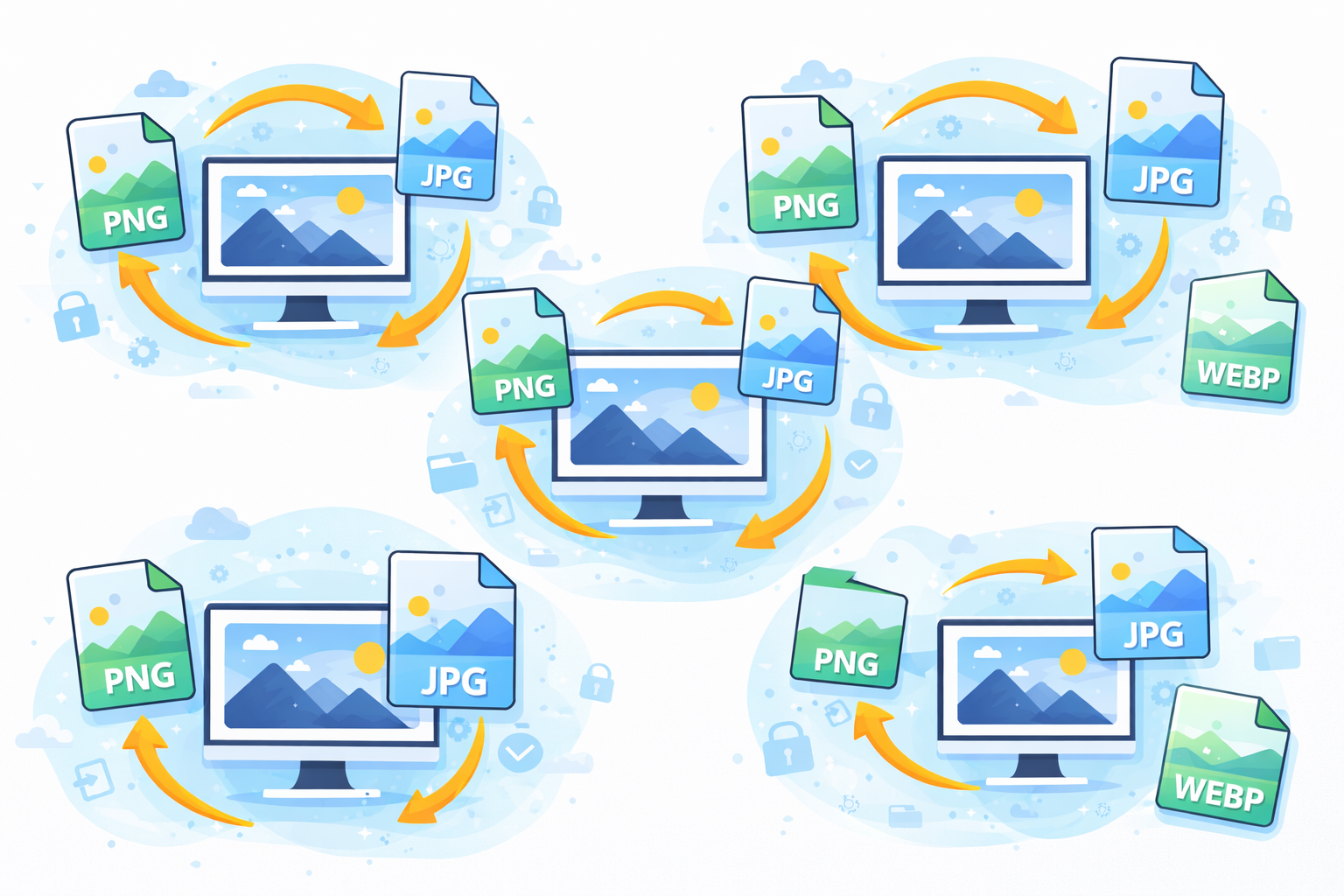
Digital images are everywhere: on websites as well as social media, in presentations, and even online stores. Sometimes, however, you’ll need to convert images in one form to another format. Perhaps you’d like to convert an image in PNG format to JPG to speed up loading or to convert HEIC images taken from your smartphone, or change to WebP for better web performance.
The issue? Many conversions reduce image quality.
Knowing how to convert images without losing quality ensures clarity and sharpness as well as precision of color when you change formats. The positive side is that the latest online tools allow for the process of converting images with high-quality easier than ever before.
In this comprehensive guide you’ll be taught:
- The most effective image formats
- What effect does conversion have on quality?
- The most effective online tools
- Professionally developed techniques to avoid loss of quality
- Common errors to avoid
- Step-by-step conversion strategies
Let’s get started.
Complete Outline
| Heading Level | Section Title |
|---|---|
| H1 | How to Convert Images Without Losing Quality Online |
| H2 | Understanding Image Formats and Compression |
| H3 | Difference Between Lossy and Lossless Compression |
| H3 | Popular Image Formats Explained |
| H2 | Why Image Quality Is Lost During Conversion |
| H3 | Compression Algorithms |
| H3 | Resolution and Metadata Issues |
| H2 | Best Image Formats for High Quality |
| H3 | PNG Format |
| H3 | TIFF Format |
| H3 | WebP Format |
| H3 | JPG Format |
| H2 | Step-by-Step: How to Convert Images Without Losing Quality Online |
| H3 | Step 1: Choose the Right Converter |
| H3 | Step 2: Upload Original High-Resolution Image |
| H3 | Step 3: Select Lossless Output Format |
| H3 | Step 4: Adjust Quality Settings |
| H3 | Step 5: Download and Verify |
| H2 | Best Online Tools for Image Conversion |
| H3 | CloudConvert |
| H3 | Convertio |
| H3 | ILoveIMG |
| H3 | TinyPNG |
| H2 | Advanced Tips to Maintain Image Quality |
| H3 | Maintain Original Resolution |
| H3 | Avoid Multiple Conversions |
| H3 | Use Lossless Compression |
| H3 | Preserve Color Profiles |
| H2 | Common Mistakes That Reduce Image Quality |
| H3 | Using Low-Quality Source Files |
| H3 | Over-Compression |
| H3 | Repeated Editing |
| H2 | Image Conversion for Websites and SEO |
| H3 | Why WebP Improves Website Speed |
| H3 | Balancing Quality and File Size |
| H2 | Security and Privacy When Using Online Converters |
| H2 | FAQs |
| H2 | Conclusion |
Understanding Image Formats and Compression
Images are stored in various formats. Each format comes with its own method of storage and compression. The difference in size of files as well as compatibility and quality.
Before you can learn how to convert images without losing quality online It is essential to know the way that the various formats of images operate.
Difference Between Lossy and Lossless Compression
There are two major kinds of compression for images:
Lossy Compression
Lossy compression deletes some files permanently to reduce the file size. While this can save the storage capacity, it could be a little less effective in terms of quality.
Examples:
- JPG
- WebP (lossy mode)
Lossless Compression
Lossless compression retains the original image information. This means that the quality of the image remains exactly like the original.
Examples:
- PNG
- TIFF
- WebP (lossless mode)
If quality is your main concern, then always opt for lossless formats whenever you can.
Popular Image Formats Explained
we’re here to help you grow stronger mentally and emotionally. are some of the most commonly used formats:
| Format | Best For | Quality |
|---|---|---|
| JPG | Photos | Medium-High |
| PNG | Graphics | High |
| WebP | Websites | High |
| TIFF | Professional images | Very High |
| GIF | Animations | Low |
Each design serves a specific function, therefore choosing the correct one is vital.
Why Image Quality Is Lost During Conversion
Image conversion can appear simple but a myriad of technical issues could affect the quality.
Compression Algorithms
The majority of converters employ compression algorithms to reduce the size of the size of files. These algorithms can remove tiny images’ specifics.
For instance:
Converting PNG to JPG frequently reduces quality due to the fact that JPG utilizes compression that is lossy.
Resolution and Metadata Issues
Another reason for loss of quality is the decrease in resolution.
Certain tools automatize:
- Downscale large images
- Remove metadata
- Change color profiles
In this case it can appear blurred or less vivid.
The right tool will prevent these issues.
Best Image Formats for High Quality
If you are looking to learn how to convert images without losing quality Online It is important to know which formats can retain the most image details.
PNG Format
PNG is among the most secure formats for keeping quality.
Advantages:
- Compression that is lossless
- Transparent backgrounds
- Perfect for screenshots and graphics
But, PNG files are usually larger than JPG files.
TIFF Format
TIFF is widely used for high-end photography as well as printing.
Features:
- Highest quality and extremely high standards
- Storage that is loss-free
- Layers and metadata are supported.
However, TIFF files are quite big and therefore not suitable for use on websites.
WebP Format
WebP is a contemporary format that was developed by Google.
Benefits include:
- Smaller file sizes
- High quality visuals
- Lossy and lossless alternatives
Many websites today use WebP to increase performance.
JPG Format
JPG is among the commonly used online format.
Strengths:
- Small file sizes
- Compatible with most devices
- Great for taking photos
Weakness:
Repeated editing or conversions can degrade quality.
Step-by-Step: How to Convert Images Without Losing Quality Online
Here’s a simple guideline you can all follow.
Step 1: Choose the Right Converter
Make sure you use a trusted converter that can support lossless conversion.
The most reliable options are:
- CloudConvert
- Convertio
- ILoveIMG
- TinyPNG
These tools offer high-quality settings.
Step 2: Upload Original High-Resolution Image
Be sure to upload your actual image and not a previously compressed image.
Higher resolution means more efficient conversion results.
Step 3: Select Lossless Output Format
Choose formats like:
- PNG
- TIFF
- WebP (lossless)
Do not convert into compressed formats unless absolutely necessary.
Step 4: Adjust Quality Settings
Most converters let you set the settings manually.
Find options that include:
- Quality percent
- Resolution
- Compression level
The quality should be set to 90-100 percent for the best results.
Step 5: Download and Verify
After conversion:
- Download the file
- Compare it to the original
- Zoom in to examine specifics
If the quality is not affected The conversion is successful.
Best Online Tools for Image Conversion
Many powerful tools allow image conversion to be done easily.
CloudConvert
CloudConvert supports more than 200 formats for files.
Features:
- Advanced settings
- Batch conversion
- Cloud storage integration
Website: https://cloudconvert.com
Convertio
Convertio is among the most simple converters.
Advantages:
- Simple interface
- Drag-and-drop upload
- Rapid processing
ILoveIMG
ILoveIMG is specifically designed for images.
It includes:
- Image conversion
- Compression
- Resizing
- Editing
TinyPNG
TinyPNG concentrates on smart compression.
Despite the reduction in file size it maintains excellent quality of image.
Advanced Tips to Maintain Image Quality
Even the top tools could be degraded if they are used improperly.
to unlocking the secrets of human behavior are the best tips from experts.
Maintain Original Resolution
Never resize images prior to conversion, unless it is absolutely it is absolutely necessary.
Resizing can remove important image details.
Avoid Multiple Conversions
Repetition of conversions such as:
PNG – JPG – PNG – JPG
could significantly lower quality.
Make sure to convert the file directly. initial file.
Use Lossless Compression
When possible, use lossless formats whenever possible.
They save every single pixel from their original images.
Preserve Color Profiles
Professional images employ color profiles, such as:
- sRGB
- Adobe RGB
Confirm that the converter has these profiles in place.
Common Mistakes That Reduce Image Quality
A lot of users harm their photos during conversion.
Using Low-Quality Source Files
If the image in its original form is low in resolution, the conversion will not make it better.
Remember:
Conversion preserves quality–it cannot create new detail.
Over-Compression
The setting of compression too high may cause blurred images.
Keep compression at a moderate level.
Repeated Editing
Every edit could degrade quality of images.
Make sure you have completed all editing prior to the final conversion.
Image Conversion for Websites and SEO
The performance of websites is heavily dependent on the images.
Large files can slow down websites and can harm SEO.
Why WebP Improves Website Speed
WebP images are typically 25-35 percent smaller than PNG or JPG.
This is enhanced:
- Page load speed
- Mobile performance
- Google positions
Balancing Quality and File Size
For websites, aim for:
- Small size file
- High-quality visual clarity
WebP usually offers the most balance.
Google suggests the use of modern formats in its guidelines for performance:
https://developers.google.com/speed/webp
Security and Privacy When Using Online Converters
Online converters can upload your images into cloud server.
To be safe:
- Beware of uploading images that are sensitive
- Make sure you use trusted tools
- Check privacy policies
- Make sure to delete the converted files
Many software tools automatically delete files after a period of time.
FAQs
1. Do I have the ability to convert photos and not lose quality?
Yes. using lossless formats such as PNG and WebP (lossless mode) permits conversion without loss of quality that is noticeable.
2. What is the best format for preserving image quality?
TIFF and PNG are of the highest quality since they employ lossless compression.
3. Is JPG always lower quality than PNG?
But not always. High-quality JPG images may look stunning however, they do use lossy compression.
4. Which online tool is best for image conversion?
CloudConvert along with Convertio have been rated among the top software tools, with high-end quality settings.
5. Why do images become blurry after conversion?
Blurrriness is usually caused by compression or resolution reduction. It can also be caused by changing from a lossy format repeatedly.
6. Should I use WebP for websites?
Yes. WebP provides smaller file sizes and superior visual quality, which makes it perfect for modern websites.
Conclusion
Being aware of how to convert images without sacrificing quality online is crucial for designers, photographers bloggers, website owners.
When you select the appropriate format, using reliable tools and avoiding common errors, you can easily convert images while conserving every aspect.
The most important takeaways
- Make use of Lossless format like TIFF or PNG in situations where quality is paramount.
- Beware of the multiple converts from the lossy formats.
- Select reliable tools such as CloudConvert and Convertio.
- Make sure to keep the the original resolution as well as color profile intact.
- Make use of WebP when designing websites to ensure speed is balanced with quality.
If you follow the right method using the right strategy, you can convert your images online with crystal-clear results each time.